Group Counseling
Connect with your peers
Each semester, hundreds of students join UHS group counseling to find a supportive, confidential space where they can connect, share experiences, and gain fresh perspectives.
It’s overall a great experience. I had a safe place to hear from others and also be heard.
Schedule your pre-group orientation
Call 608-265-5600 (option 2)
Fall groups
To enroll in a group schedule your pre-group orientation by calling 608-265-5600 (option 2) or web booking via MyUHS
Understanding Self and Others groups are often the treatment of choice for people who want to gain emotional awareness and strengthen how they connect and interact with others. They can be particularly helpful for students who experience troubled relationships (including romantic, family, and friend-related), loneliness, low self-esteem, depression, and difficulty with intimacy/vulnerability. These groups offer a safe environment to identify and explore feelings, give and receive support and feedback to practice new healthier ways of relating to others, and to feel less lonely or isolated.
| Day | Time | Group Leaders | Mode |
|---|---|---|---|
| Monday | 10:30a.m. – 12 p.m. | Sarah Kohlstedt and Devin Kelly-Barnett | In-person |
| Monday | 2:30 – 4 p.m. | Ben de Boer and Adam Moreno-Mendelson | In-person |
| Thursday | 12:30 – 2 p.m. | Alex Taheri and Isabella Annan | In-person |
| Thursday | 3 – 4:30 p.m. | Matthew Rozzi and Sophia Smith | In-person |
| Friday | 1 – 2:30 p.m. | Heidi Binder and Connor Thornton | In-person |
Schedule for understanding self and others groups
The way that we view ourselves, make decisions, or interact with others is sometimes related to how our family operated or how we were raised. The Family of Origin Processing Group provides a space for students to share about their upbringing, process their experiences, learn more about themselves, connect with peers, and understand how their past is impacting their current lives. Group topics may include familial roles, current issues or patterns connected to their family, healing from harmful/painful family dynamics, identifying emotional wounds from their upbringing, and/or navigating current self-care and boundary needs.
Fridays from 11 a.m. – 12:30 p.m. (in-person)
Group Leaders:
Building Resilience is a skills-based group that helps students reconnect with their inner resources through body-centered and experiential practices. Participants will explore the connection between emotions, physical sensations, movements, and thoughts while learning practical tools to increase awareness of the body and self-understanding. By engaging the body’s wisdom and the five senses, students will develop greater confidence in navigating challenges, responding to stress, and fostering resilience.
Wednesdays from 3 – 4:30 p.m. (in-person)
Group Leaders:
This group is for anyone who is willing to take risks in creating art to expand ways of communication, self-expression, and connection with others. No artistic experience is required, and the group will be focused on the experience of art making rather than on making “good” art. A typical group session will include time for art making based on a prompt or personal inspiration, sharing of artwork, and connecting with group members. Access to art materials is not a requirement of this group; co-facilitators will discuss options for materials during the pre-group orientation.
Fridays from 10:30 a.m. – 12 p.m. (in-person)
Group Leader:
A supportive group environment focused on the emotional, behavioral, and organizational challenges associated with the dissertation process. Participants establish individual weekly research and personal goals, and share experiences and perspectives around common themes (e.g., procrastination, careers on or beyond the tenure track, advisor etiquette, and juggling multiple life roles.
Fridays from 10:30 a.m. – 12 p.m. (virtual)
Group Leader:
This group provides a space for students to explore their relationship with food, movement, and their bodies, as well as connect with peers around these shared experiences. Students will learn and refine skills in four key areas: Mindfulness, distress tolerance, emotional regulation, and interpersonal effectiveness. These skills, drawn from Dialectical Behavior Therapy (DBT), are intended to help students modify behavioral, emotional, and thinking patterns associated with challenges with mood management, maintaining relationships, and stress rooted in eating concerns. Anti-diet and Health at Every Size principles are foundational to the group.
Mondays from 10:30 a.m. – 12 p.m. (virtual)
Group Leaders:
A group designed for graduate students to connect with peers, give and receive support, and cultivate a community wherein members can explore the challenges encountered during this unique phase of life. Topics will be developed by group members, but may include time management, relationship concerns, financial stress, burnout, isolation, and maintaining work/life balance.
Mondays from 1 p.m. – 2:30 p.m. (virtual)
Group Leaders:
This group helps participants express and explore emotions related to their experiences of bereavement. Open to people who have lost a loved one (e.g., family member, friend). Combines sharing, discussion, support, and activities.
Fridays from 1 – 2:30 p.m. (in-person)
Group Leaders: Tyler Peterson or
This is a semi-structured process group for people who strive to feel worthy, to extend kindness to themselves, and to understand how to be your own best friend. Topics that will be explored include self-esteem, self-compassion, shame and guilt, vulnerability, and authenticity. Group members will engage in various activities such as journaling and mindfulness with periodic work outside of sessions.
Wednesdays from 3 – 4:30 p.m. (virtual)
Group Leader: Stephanie Denu
This group has been cancelled.
If things sometimes turn out differently than you expect when drinking or using other substances, there are ways to facilitate a better outcome. Join fellow students for discussions about your life, what goes well and what still needs some improvement. Learn skills that can be helpful in whatever goals you are hoping to achieve, like mindfulness, distress tolerance, emotional regulation and interpersonal effectiveness.
Thursdays from 1 – 2:30 p.m. (in-person)
Group Leaders:
This group is intended for students struggling with social anxiety. Sessions are designed to be educational and experiential, helping participants develop awareness and skills to overcome anxiety and self-consciousness in social situations. In a structured and supportive environment, participants will learn concepts, drawn from Acceptance and Commitment Therapy (ACT), intended to bolster self-confidence, acceptance, and willingness to confront the social challenges of everyday life.
Tuesdays from 2:30 – 4 p.m. (in-person)
Group Leaders:
In this group, students will learn and refine skills in four key areas: mindfulness, distress tolerance, emotional regulation, and interpersonal effectiveness. These skills, drawn from Dialectical Behavior Therapy (DBT), are intended to help students modify behavioral, emotional, and thinking patterns associated with challenges in mood management and maintaining stable relationships.
Mondays from 1 – 2:30 p.m. (in-person)
Group Leaders:
Step away from your screen and meet us outdoors for some connection time in the green! Start your day with an ecotherapy-themed experiential skills group for survivors to connect and build community through mindfulness and nature excursion. This group will meet outdoors and invite group members to participate in guided meditation, breathing practices, compassion practices, and somatic grounding exercises. There will be opportunity for discussion, reflection, and camaraderie with other group members. Please note, confidentiality may be limited due to the public setting. Please feel free to bring pillows, blankets, or chairs for comfort when sitting outside. Morning coffee and tea welcome and encouraged.
Wednesdays from 10:30 a.m. – 12 p.m. (in-person)
Group Leaders:
College can be challenging and often requires more than just academic skills. To succeed in college students must take care of all aspects of the self. The Community and Connection Space is a group that supports the whole student. Group participants will have the opportunity to share highs and lows, seek support with challenging situations, learn how to navigate campus climate, build resiliency, and gain tools to foster personal growth and mental wellness.
Mondays from 2:30 – 4 p.m. (virtual)
Group Leaders:
Join us for a welcoming space to talk about mental health concerns, share about your experiences, and to give and receive support. Through building community, the group fosters resilience, self-expression, and a sense of belonging.
Mondays from 2:30 – 4 p.m. (virtual)
Group Leaders:
A support and psychoeducational group for students who are navigating gender identity developments and acceptance. Focus is on establishing positive connections with others and exploring the process of integrating gender identity in an authentic, self-affirming way.
Fridays from 3 – 4:30 p.m. (in person)
Group Leader:
What to expect
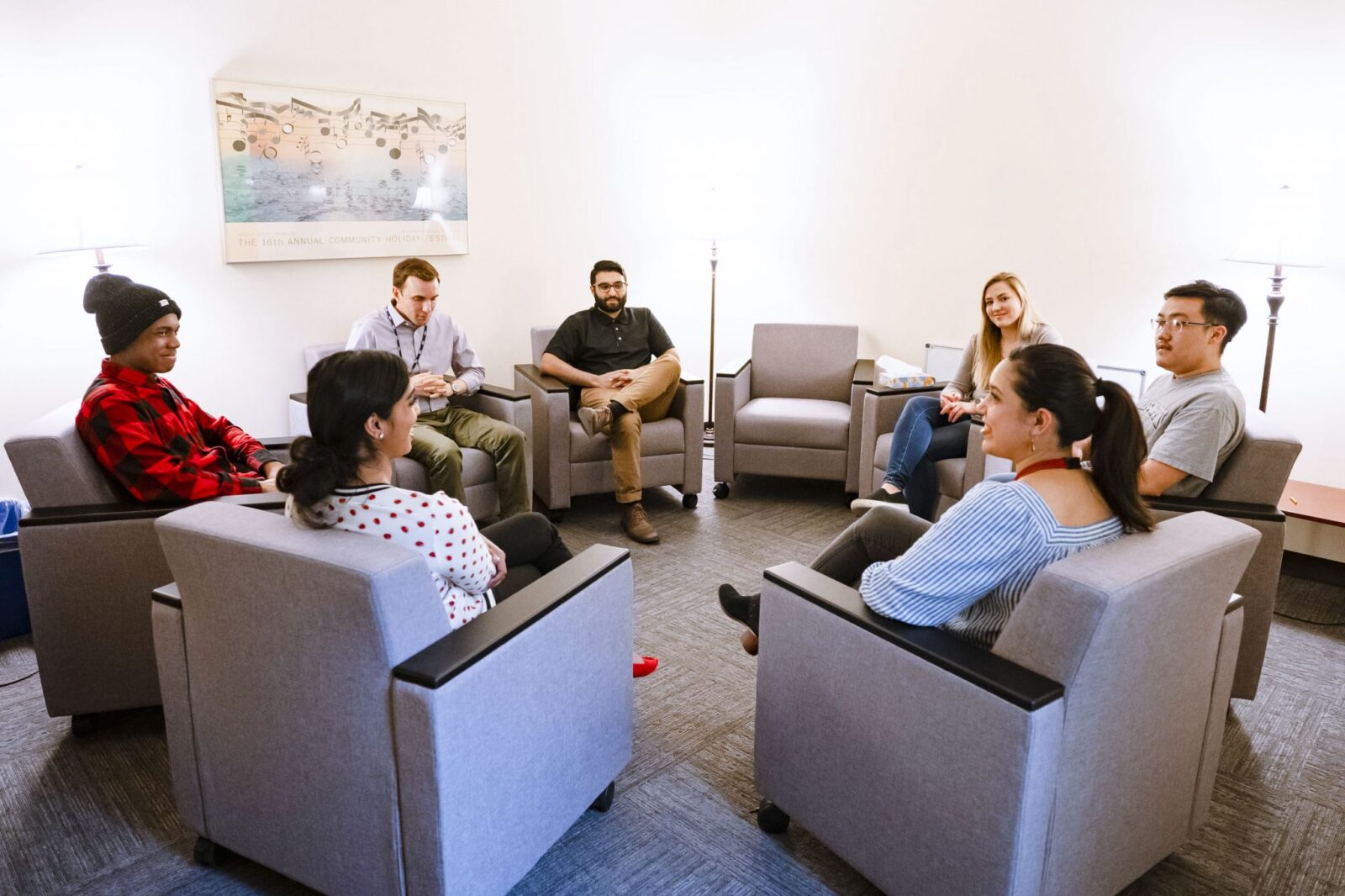
Groups typically consist of 6-8 students and run for 8 weeks with required continuous attendance. All in-person groups occur at UHS, unless stated otherwise. You can expect to:
- Have in-depth peer-to-peer interaction with support from the facilitators
- Develop a deeper understanding of self, relationship dynamics, and interpersonal patterns
- Explore and process your mental health concerns through sharing personal information
- Connect with others who share similar experiences and/or identities
Frequently asked questions
A pre-group orientation is a phone call to explore your options and learn more about the groups you are interested in. It does not mean you’re committed to enrolling.
Schedule your pre-group orientation by calling 608-265-5600 (option 2) or web booking via MyUHS. When calling, mention the group you’re interested in, along with the day and time, and request to be scheduled for a pre-group orientation.
Take the call in a private, comfortable space. You’ll meet with the group facilitator, ask questions, and learn more about the topics covered and how the group will be run. The group facilitator will also confirm the start and end dates.
Group counseling offers several benefits including:
- Enhanced quality of relationships
- Increased self-awareness and understanding of others
- Increased confidence and self-esteem
- Increased ability to give and receive honest feedback
- Enhanced sense of belonging with others who have similar experiences and/or identities
You must be physically located in the state of Wisconsin for group sessions. Due to professional licensure requirements, Mental Health Services and Psychiatry providers are not able to provide counseling treatment and care to students who are physically outside of the state of Wisconsin.